
Free Site Assessment! Melbourne Planner.250 Permits managed.Subdivision specialist, land developer. Design Town Planning Build
Land Data for Any Victorian Property Address
Land Data for Victoria’s Planners, Architects & Developers — The Most Informative Source. What Zoning Is My Land?
Enter any Victorian property address to instantly access land data, including zoning, council details, amenities, walkability, school catchments and more.
The Platform is in Beta mode. Your feedback is appreciated.
Built by town planning and design professionals, DuttaAi delivers location-specific insights that help you assess development potential before committing to detailed design or costly due diligence.
Use DuttaAi to quickly understand how many townhouses may be possible on a regular-shaped site and move forward with greater confidence. DuttaAi interfaces with Victorian planning controls to automate feasibility calculations and risk assessments.
Can You Subdivide Your Land?
What can you build?
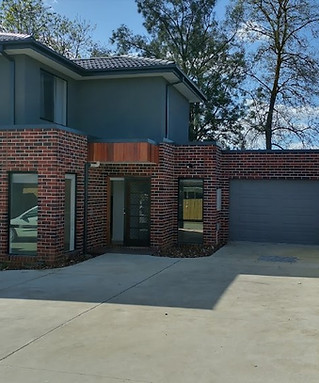
Tandem Dual Occupancy
One behind the other subdivision
Most common form of subdivision where you build one new dwelling lot behind an existing house.
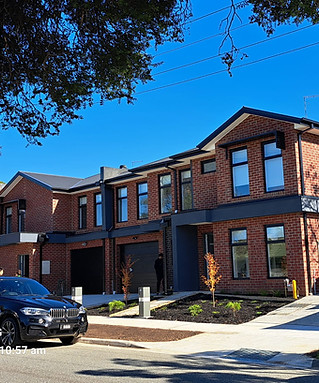
Corner lot subdivision
Demolish the house and build 2-6 street facing units
Most common form of subdivision where you build one new dwelling lot behind an existing house.
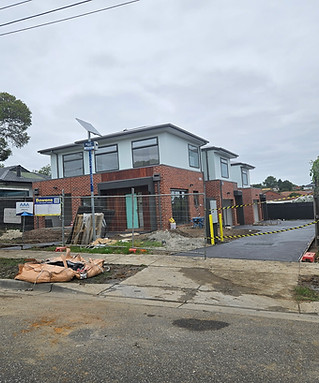
Units on a vacant lot
Demolish the house and build 3-10 units
If your land is large enough this could be a good option.
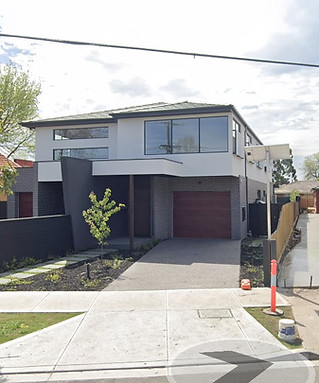
Duplex dual occupancy
Duplex subdivision
Duplex subdivision give large floor areas. You could have shared wall or be independent of each other.
What does the Zoning allow?
Questions and Answers
Thinking About Subdividing Your Backyard, Corner Lot, or Vacant Block in Victoria?
You're in the right place. We help Victorian homeowners and developers obtain planning permits for dual occupancy subdivisions, townhouse projects, and corner lot developments.
Key Facts:
-
A Planning Permit is required for all dual occupancy and townhouse subdivision projects in Victoria
-
Feasibility depends on zoning, overlays, access, orientation, and site conditions
-
Common zones: General and Neighbourhood Residential Zones, Residential Growth Zone, Mixed Use and Township Zone and more
-
Common overlays that affect subdivision: Heritage, Bushfire, Tree Preservation, Airport Height
What You Get:
-
Free Site Assessment with fast, expert feasibility analysis
-
AI-Powered Report using DuttaAi for instant insights on subdivision potential for Townhouse projects
-
Planner-Supervised Review from Melbourne Registered Planner Swarup Dutta
-
Clear Next Steps for first-time or experienced developers
Why Trust Us:
-
Founder Swarup Dutta managed 250+ successful planning permits
-
Melbourne Registered Planner with B.Arch. (Bachelor of Architecture)
-
Real developer experience: developed own subdivision and owner-built complex engineered development
-
Former University Lecturer, 15+ years Victoria planning expertise
Don't guess. Get expert advice.
Fast, expert assessment to understand your options—no obligation, just clarity.
Understanding Land Subdivision in Victoria
In most suburban backyard subdivision projects, a subdivision requires a planning permit from your local council. Your site needs to suit the zoning, overlays, driveway access, services, trees, and layout of the future lots.
The process starts with our quick review of your title, Section 32, site dimensions, and any constraints that may affect feasibility.
Dutta.ai offers a free, planner-supervised site assessment to help you understand whether your land may support subdivision, dual occupancy, or multi-unit outcomes.
How We Assess Your Site
4-step planner-supervised process
-
Submit Your Details — Provide your address, title, Section 32, and any site photos or information about fences, trees, services, and existing buildings.
-
Choose between a Free High level Site assessment or a paid AI-Powered Preliminary Review — Our Dutta.ai feasibility engine performs an initial analysis of your property against Victorian planning codes and council requirements for townhouse sites.
-
Planner-Supervised Assessment — Swarup is a Melbourne-based registered planner. He reviews the AI output and provides expert commentary on your subdivision potential.
-
Receive Your Feasibility Report — Get a clear, actionable report outlining whether your land may support subdivision, dual occupancy, or multi-unit development.
What We Look For
Common indicators of subdivision feasibility.
-
Driveway access and width (minimum 3 metres)
-
Site depth, width, and orientation.
-
Easements, covenants, and restrictive instrument
-
Existing trees, services, and topography
-
Zoning and overlay requirements
-
Suitability for backyard, corner lot, or vacant block subdivision
-
Orientation
-
impact on amenities
-
Parking
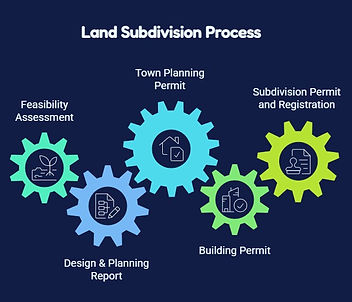
Our Property Subdivision Process Flow
From Feasibility to Building Permit. Your subdivision journey
1. Feasibility Assessment.
We assess whether your land may support subdivision, property subdivision, or land subdivision.
2. Design & Planning Report.
If feasibility stacks up, we prepare design, drawings, and planning report for Town Planning approval.
3. Town Planning Permit.
Once issued, this permit allows us to progress to your Building Permit.
4. Building Permit.
With the Building Permit in place, you can enter into a Building Contract and apply for finance.
5. Subdivision Permit and Registration of New Lots.
This final stage involves obtaining the Subdivision Permit and registering the new lots. This process can work in parallel with construction—once all services are connected to each lot.
Need more detailed information on the Subdivision process? Read on.

Childcare
Childcare Permits
We know childcare design and have obtained planning approvals in Victoria

Granny Flats
Granny flats are passive income providers
We know granny flats and prepare full design and Town Planning (if required) and Building Permits.

Mixed Use
Mixed use project- commercial and Residential
If your land is large enough this could be a good option.

Medical Centre
New or a house conversion
Full design and Permits obtained. This one was approved for 9 practitioners and Day Surgeries.
WHY TRUST OUR ADVICE ?
Meet Your Founder: Swarup Dutta
From Developer to Advisor—He's Been There!
Swarup Dutta isn't just a town planning consultant—he's a developer who has done it himself. While others give theoretical advice, Swarup brings real-world experience from the trenches of Victorian property development.
WHAT HE'S DONE:
-
Managed hundreds of successful planning permits (250+ permits delivered)
-
Developed his own successful subdivision project
-
Designed and owner-built a complex engineered development
-
Founded DuttaAi, an AI-powered feasibility assessment engine for Victorian property
-
Won difficult permits at the VCAT
WHAT YOU GET:
When you work with Swarup, you get someone who understands both sides:
-
The planner's perspective (council requirements, code compliance)
-
The developer's perspective (costs, timelines, risks, yield)
-
The design outlook- marrying good design with planning intelligence
He will share his experience with you—whether you are a first-time developer or have developed before. No jargon. No guesswork. Just honest, practical advice from someone who has walked your path.
CREDENTIALS: B.Arch. | Melbourne Registered Planner | 250+ Permits managed| Former University Lecturer | Property Developer | Dutta Ai Feasibility developer | Victorian Planning specialist
PROFIT ANALYSIS: Backyard Subdivision Only
Scenario: Subdivide Existing Lot, No Building
INVESTMENT COSTS (high level approximate costs)
Cost Category | Amount |
Existing Property (already owned) $0 (owned)
Town Planning Application $2,500
Subdivision Permit Fee $2,500
Land Surveyor $7,500
Design & Planner Fees $11,000
Civil Engineer $2,500 if required
Arborist Report (if trees) $1,200 if required
Council Infrastructure Charges $TBC
Services to New Lot $28,000 TBC
Crossover $4,000
Landscaping $TBC
Legal & Conveyancing $2,000
Contingency (7%) $8,500
Interest (6 months @ 7%) $?
Marketing (sell new lot) $15,000
TOTAL INVESTMENT $90,000 approx.
REVENUE
Total Revenue $650,000.00 ( subdivided lot)
Total Investment $ 90,000.00 TBC
Net Profit Revenue - Investment $560,00.00
These numbers are to be approximate and should be site specific.
Heading 2
Victorian Land Subdivision FAQ: Top 10 Questions for Prospective Developers
SUBDIVISION ACROSS 31 GREATER MELBOURNE COUNCILS
Subdivision in Victoria Councils: Your Local Planning Authority Matters
31 Greater Melbourne councils – each with unique requirements
Subdivision in Victoria is regulated by your local council, and each of the 31 Greater Melbourne municipalities has its own planning scheme, fees, and assessment criteria. Understanding your local council's requirements is critical to successful property subdivision approval.
All councils assess larger subdivision applications against Clause 56 (ResCode) for urban areas, which sets objectives and standards for residential subdivision. However, each council has local planning policies that can significantly impact your project's feasibility, timeline, and costs. Typical suburban lots will require a town planning permit approval before subdivision can proceed - dual occupancy and townhouse sites.
THE 31 GREATER MELBOURNE COUNCILS CHARACTERISTICS
Understanding Victoria's Low Rise Housing Code
What everyday Victorians need to know about residential development rules
SIMPLE EXPLANATION: WHAT IS THE LOW RISE HOUSING CODE?
The Townhouse and Low-Rise Code (also called Clause 55) is Victoria's statewide set of rules for building townhouses, units, and low-rise apartments up to 3 storeys. It was introduced in March 2025 to make planning permits faster, clearer, and more certain for developers and homeowners.
IN SIMPLE TERMS:
-
Low rise = 1-3 storey buildings (townhouses, units, small apartments)
-
Medium density = 2 or more dwellings on one lot
-
Deemed to comply = If you meet all standards, council MUST issue a permit
This code replaced the old, subjective rules with clear, measurable standards. No more guesswork.
WHY THIS CODE WAS CREATED
The Victorian Government introduced this code to:
-
✓ Increase housing supply in established suburbs
-
✓ Support housing diversity (more townhouses, not just houses or high-rises)
-
✓ Speed up planning permit approvals
-
✓ Reduce council discretion and uncertainty
-
✓ Improve design quality of medium-density housing
-
✓ Make Victoria more livable and affordable
WHO DOES THIS CODE APPLY TO?
YES, it applies to:
-
✓ Townhouses (attached or detached, 1-3 storeys)
-
✓ Units (2 or more dwellings on one lot)
-
✓ Low-rise apartment buildings (up to 3 storeys)
-
✓ Dual occupancy (two homes on one block)
-
✓ Residential buildings in residential zones
NO, it does NOT apply to:
-
✗ Free-standing single houses (different rules apply)
-
✗ High-rise buildings (4+ storeys use Clause 57)
-
✗ Buildings in heritage overlays (special rules apply)
-
✗ Rural zones or environmentally sensitive areas
-
✗ Sites with restrictive covenants
WHICH ZONES USE THIS CODE?
The Low Rise Housing Code applies in these residential zones:
-
General Residential Zone (GRZ)
-
Residential Growth Zone (RGZ)
-
Mixed Use Zone (MUZ)
-
Neighbourhood Residential Zone (NRZ) - may have additional restrictions
MOST MELBOURNE SUBURBS fall under one of these zones.
Development workflow

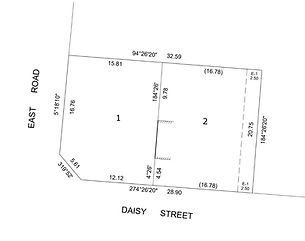
Example of a corner style three lot property subdivision and dual occupancy in a Melbourne suburb taken from a public domain

Small or Large subdivisions

We work across all Councils in Melbourne and Regional Victoria,


Dual Occupancy -Contemporary Free standing Duplex

Dual Occupancy site criteria


FREQUENTLY ASKED QUESTIONS
Can I subdivide my land in Victoria?
It depends on zoning, lot size, access, services and title restrictions. A planner-led feasibility review is the fastest way to understand your site’s potential.
Do I need a planning permit to subdivide?
Yes, in many cases. Victorian rules require a planning or subdivision permit for subdivision and new dwellings.
What sites are best for backyard subdivision?
Sites with good side access, flat land, minimal trees and nearby services usually work best.
Are corner blocks better for development?
Often yes. Corner blocks can provide better access and design flexibility.
Can I keep the existing house and build behind it?
Possibly, but a 3metre wide side access for a driveway is critical.
What is a dual occupancy?
Two dwellings on one lot, either attached or detached.
What should I send for an assessment?
Section 32, title details, site photos, trees and street features.
Do covenants or Section 173 agreements matter?
Yes. These can limit what can be built or subdivided.
What is Dutta.ai?
Hybrid AI-powered site assessment engine for Victorian planning, supervised by a Registered Planner.
Who supervises the assessment?
Swarup Dutta, Melbourne Registered Planner, 250+ permits managed.

Understanding the Subdivision Act and Process in Victoria
Subdividing land in Victoria requires formal approval from your local council. The process typically takes 6 to 12 months and involves hiring a licensed surveyor to lodge your application through the online SPEAR system. We organise the whole process.
Step-by-Step Process:
-
Conduct Due Diligence: Hire a licensed land surveyor or town planner like Swarup to do a feasibility check. They will verify your local council's zoning rules, overlays, and minimum lot sizes to see if your property is eligible.
-
Re-establishment Survey: Have our surveyor map out your property's exact title boundaries.
-
Draft a Plan of Subdivision: Our surveyor will draw up the proposed plan outlining the new boundaries and any common property.
-
Council Approval: Submit the application through SPEAR. The council will review it, consult utility authorities (like water and power), and—if approved—issue a Planning Permit and a Statement of Compliance.
-
Register New Titles: Once all conditions are met, our surveyor and a property lawyer will lodge the plan with Land Use Victoria to register the newly created titles.
Additional Costs to Manage:
-
Taxes and stamp duty considerations
-
Utility connection costs (water, electricity, gas, NBN)
-
Infrastructure contributions and council charges
-
Surveyor, planner, and legal fees
Let Us Help You Narrow Down the Specifics:
To provide accurate guidance for your block, we need to know:
-
What is your property address and suburb?
-
Is there already a second dwelling built on the block?
-
Are you looking to build first, or simply subdivide the vacant land?
Share these details and we'll assess your feasibility supervised by Melbourne Registered Planner Swarup Dutta.